
Scientific evidence
Research
NightWatch+ originates from decades of conjoined research by the Dutch TeleEpilepsy consortium.
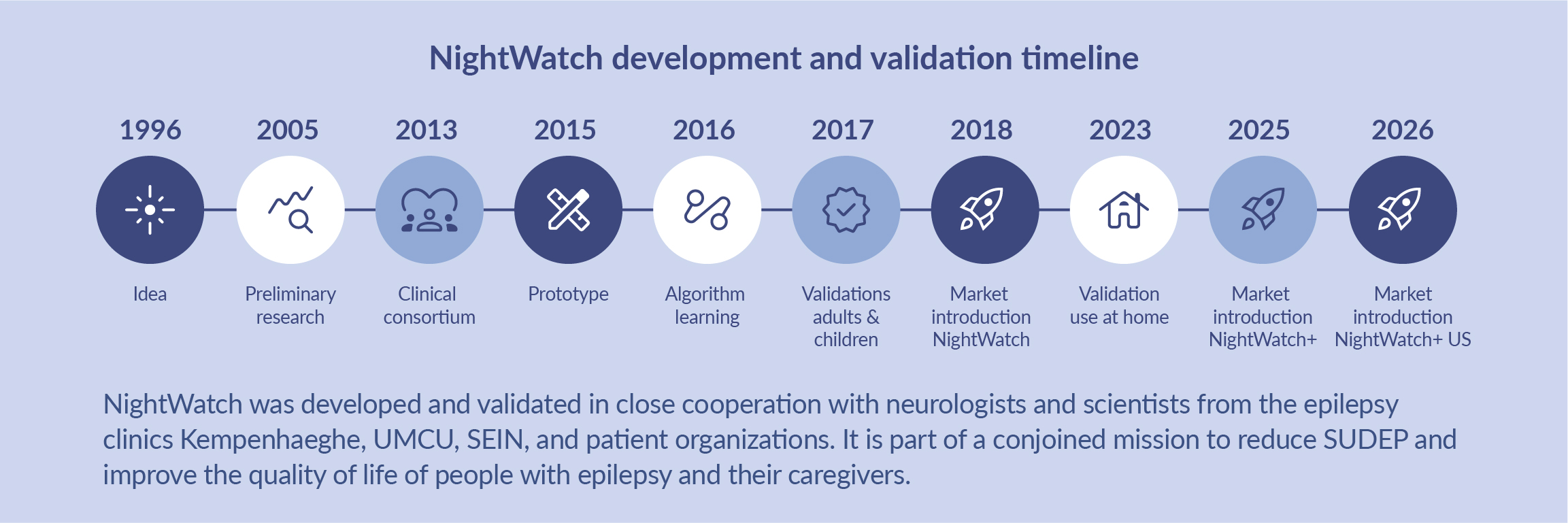
Most nocturnal seizures go unrecognized by caregivers. NightWatch is designed to support people with epilepsy and their caregivers by providing reliable seizure monitoring during nighttime hours, when supervision can be challenging and stressful. Our focus is on detecting seizure types associated with increased risk of morbidity and mortality that may require immediate assistance, including:
- Tonic-clonic seizures (TC)
- Tonic seizures (if clustered or prolonged >30 seconds)
- Hyperkinetic seizures
- TC-like seizures
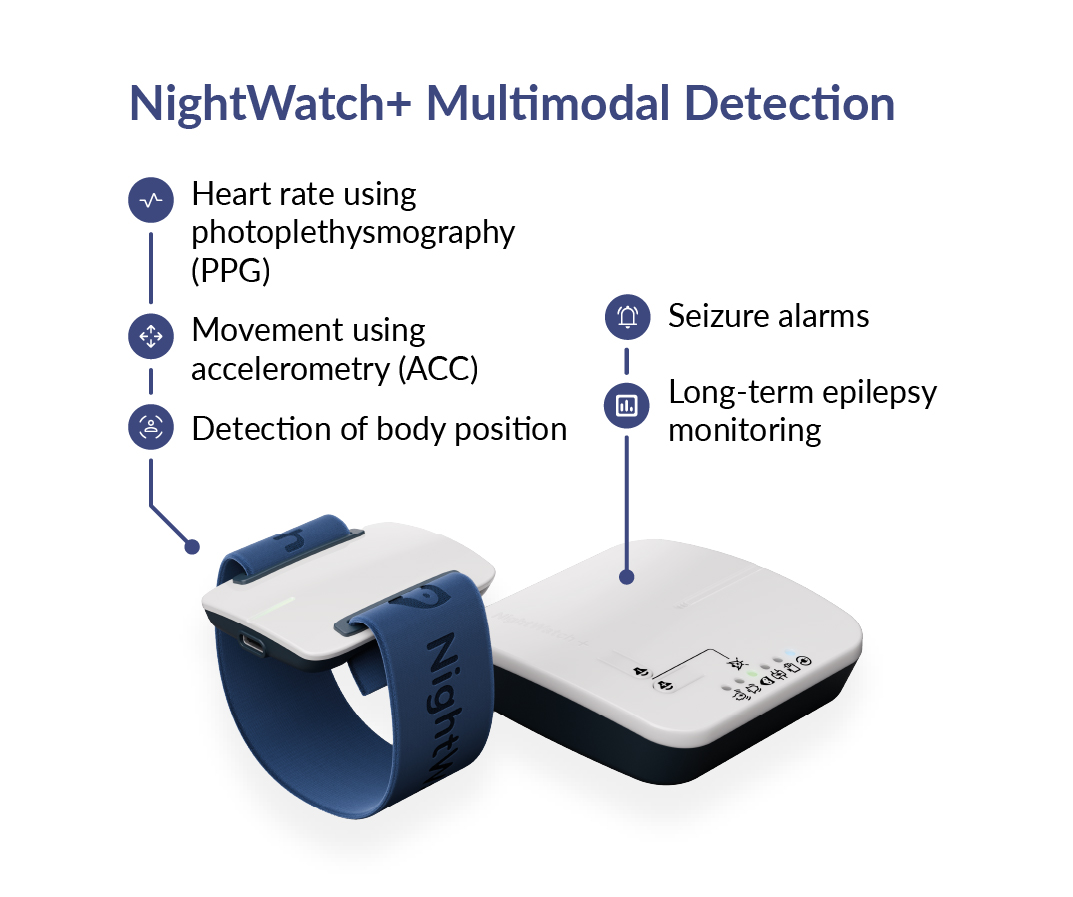
Multimodal Seizure Detection
NightWatch detects nocturnal epileptic motor seizures by tracking changes in heart rate and specific movement patterns through a wearable sensor. It uses advanced PPG for heart rate tracking and a 3D accelerometer for body position and movement. The detection algorithm is optimized using long-term data from adults and children (> 4 years of age) with thousands of nighttime seizures, validated against video recordings as the reference standard.
Validated Detection Performance
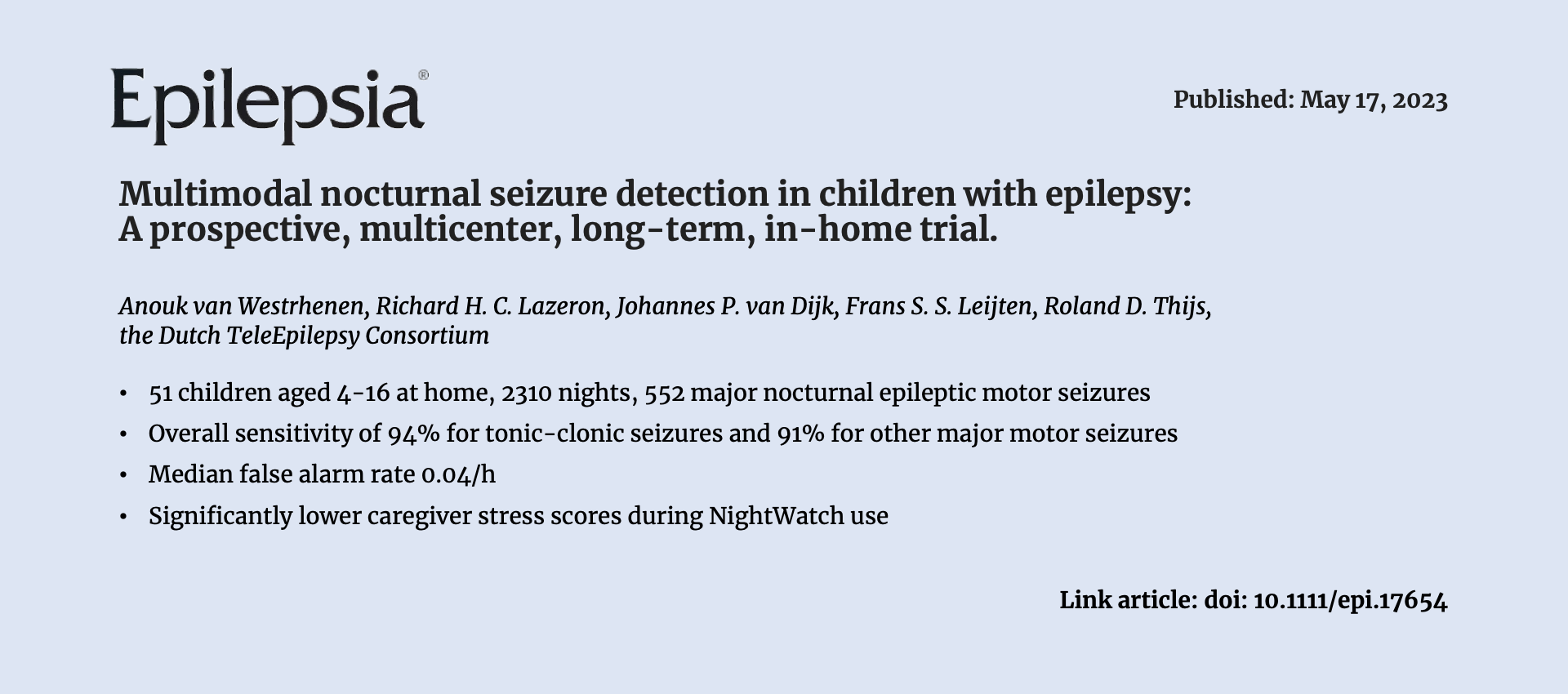
NightWatch’s detection performance has been validated through multiple multicenter trials in realistic home settings. The studies demonstrated for children (4-16 years of age) mean sensitivities of 90% for all major motor seizure types and 98% for tonic-clonic seizures. The mean false alarm rate was 0.07 per hour, and the median was 0.04 per hour, meaning that most users experienced 1 false alarm every 3-4 nights. The false alarm rates varied widely among users, and many of the false alarms were, in fact, minor seizures that did not qualify as major (dangerous) nocturnal motor seizures.
Publications
Key publication
Other publications
Other relevant publications on NightWatch or its working principles
- Zelano, J., Beniczky, S., Ryvlin, P., Surges, R., Tomson, T., & the ILAE SUDEP Task Force. (2023). Report of the ILAE SUDEP Task Force on national recommendations and practices around the world regarding the use of wearable seizure detection devices: A global survey. Epilepsia Open. doi.org/10.1002/epi4.12801
Summary:
The article “Report of the ILAE SUDEP Task Force on national recommendations and practices around the world regarding the use of wearable seizure detection devices” examines global recommendations and practices concerning the use of wearable devices for seizure detection. It highlights the importance of these technologies in monitoring seizures and their potential to enhance patient safety. The article mentions that NightWatch has been clinically tested in the Netherlands and is used in epilepsy care. The device has contributed to increased patient safety and improved nighttime monitoring. - Hadady L, Klivényi P, Fabó D, Beniczky S. Real-world user experience with seizure detection wearable devices in the home environment. Epilepsia. 2022;00:1–6. doi: 10.1111/epi.17189
Summary:
The article examines the practical usability and effectiveness of wearable seizure detection devices in a home setting. It highlights the general feasibility and benefits of automated seizure detection at home, which can contribute to improved monitoring and safety for patients with epilepsy. - van Elmpt WJC, Nijsen TME, Griep PAM, Arends JBAM. A model of heart rate changes to detect seizures in severe epilepsy. Seizure. 2006;15(6):366–75. doi: 10.1016/j.seizure.2006.03.005
Summary:
The article explores using heart rate changes to detect seizures in patients with severe epilepsy. It developed two algorithms to monitor heart rate patterns, identifying significant changes like tachycardia and bradycardia during seizures. The study found that heart rate changes occurred in most patients. It concluded that heart rate changes can be used for automatic seizure detection, provided the model parameters are tailored to individual patients.
- Massé F, Penders J, Serteyn A, van Bussel M, Arends J. Miniaturized wireless ECG-monitor for real-time detection of epileptic seizures. WH’10. 2010 Oct; 111-117. doi: 10.1145/1921081.1921095
Summary:
The article highlights the feasibility of using heart rate changes as indicators for seizure activity, offering a non-invasive method for monitoring patients with epilepsy.
- Lamberts RJ, Thijs RD, Laffan A, Langan Y, Sander JW. Sudden unexpected death in epilepsy: People with nocturnal seizures may be at highest risk: Nocturnal Seizures as a Risk for SUDEP. Epilepsia. 2012;53(2):253–7. doi: 10.1111/j.1528-1167.2011.03360.x
Summary:
The article investigates the association between nocturnal seizures and the risk of sudden unexpected death in epilepsy (SUDEP). The study suggests that individuals experiencing seizures during sleep may have an increased risk of SUDEP. These findings underscore the importance of preventive measures, which may include nighttime monitoring and interventions to reduce seizure frequency during sleep.
- van Andel J, Leijten F, van Delden H, van Thiel G (2015) What Makes a Good Home-Based Nocturnal Seizure Detector? A Value Sensitive Design. PLoS ONE 10(4): e0121446. doi: 10.1371/journal.pone.0121446
Summary:
The study investigates the development of a device for in-home detection of nocturnal seizures in patients with severe epilepsy. It identifies five key values: health, trust, autonomy, accessibility, and reliability. These values were then linked to design choices for the device.
- Arends JB, van Dorp J, van Hoek D, Kramer N, van Mierlo P, van der Vorst D, et al. Diagnostic accuracy of audio-based seizure detection in patients with severe epilepsy and an intellectual disability. Epilepsy Behav. 2016;62:180–5. doi: 10.1016/j.yebeh.2016.06.008
Summary:
The study evaluates the use of audio monitoring for detecting major seizures in patients with severe epilepsy. It suggests that audio-based detection could be used alone or in combination with other systems for better seizure monitoring.
- van Andel J, Thijs RD, de Weerd A, Arends J, Leijten F. Non-EEG based ambulatory seizure detection designed for home use: What is available and how will it influence epilepsy care? Epilepsy Behav. 2016;57:82–9. doi: 10.1016/j.yebeh.2016.01.003
Summary:
The article reviews existing non-EEG seizure detection systems suitable for home use. It evaluates various devices and algorithms, discussing their potential impact on epilepsy management. The study emphasizes the importance of these technologies in enhancing patient safety and monitoring outside clinical settings.
- van der Lende M, Cox FME, Visser GH, Sander JW, Thijs RD. Value of video monitoring for nocturnal seizure detection in a residential setting. Epilepsia. 2016;57(11):1748–53. doi: 10.1111/epi.13558
Summary:
Conducted in a residential care facility, the research found that video Monitoring significantly increased the identification of seizures requiring clinical intervention. The study concluded that Video monitoring is a valuable tool for enhancing patient safety and improving the management of nocturnal seizures in such settings.
- van Andel J, Ungureanu C, Arends J, Tan F, Van Dijk J, Petkov G, et al. Multimodal, automated detection of nocturnal motor seizures at home: Is a reliable seizure detector feasible? Epilepsia Open. 2017;2(4):424–31. doi: 10.1002/epi4.12076
Summary:
The study investigates the feasibility of using non-electroencephalographic (non-EEG) signals—specifically heart rate and accelerometry—to detect various types of nocturnal seizures, including tonic, tonic-clonic, hypermotor, and clusters of short myoclonic/tonic seizures. The research involved monitoring patients during diagnostic video-EEG examinations. The findings suggest that automated seizure detection using these non-EEG signals is feasible and could enhance patient safety by enabling timely interventions.
- Geertsema EE, Thijs RD, Gutter T, Vledder B, Arends JB, Leijten FS, et al. Automated video-based detection of nocturnal convulsive seizures in a residential care setting. Epilepsia. 2018;59:53–60. doi: 10.1111/epi.14050
Summary:
The study evaluates the effectiveness of a video-based algorithm for detecting nocturnal convulsive seizures in individuals with epilepsy residing in a care facility. The algorithm analyzes group velocity signals derived from video sequences to identify seizures. The study concludes that this automated system is effective for real-time seizure detection in residential care settings, potentially enhancing patient safety.
Cited literature
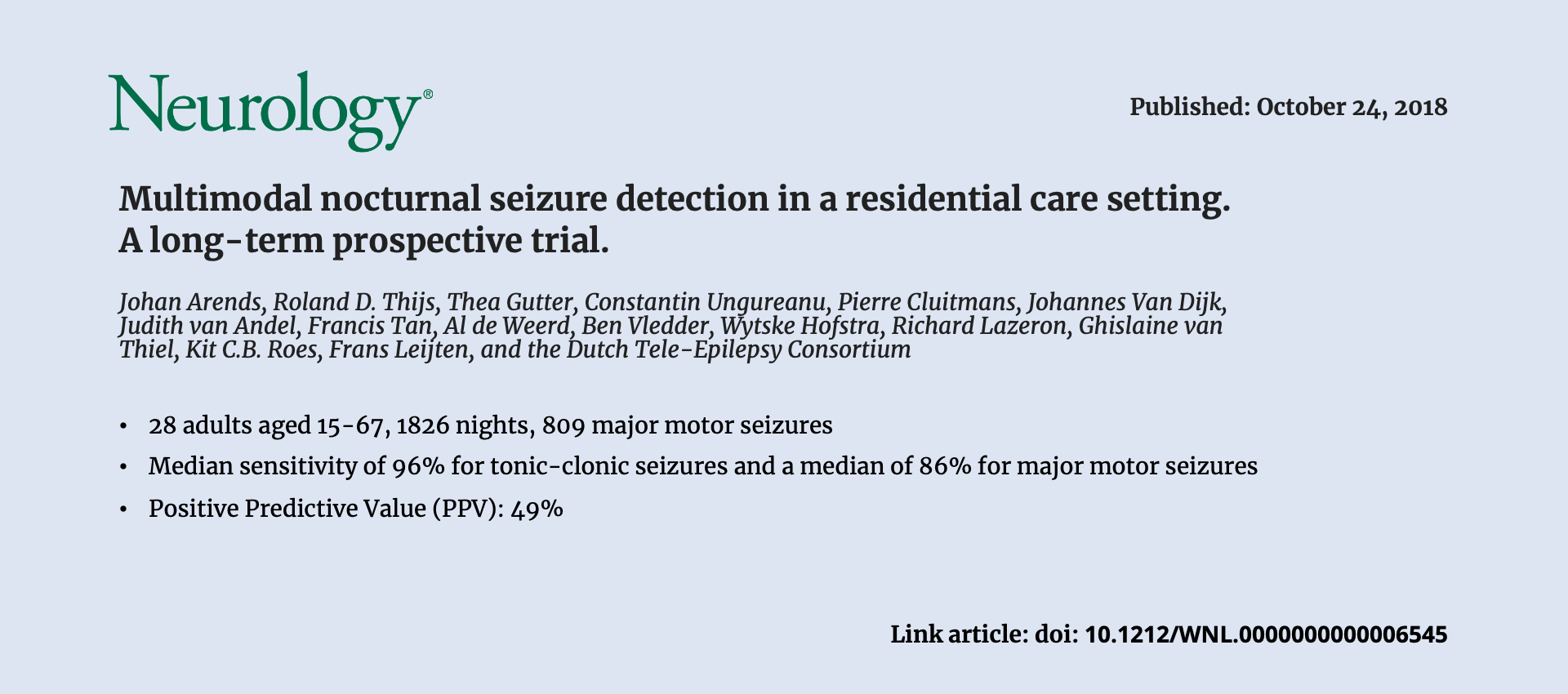
- Arends J, Thijs RD, Gutter T, Ungureanu C, Cluitmans P, van Dijk J, et al. Multimodal nocturnal seizure detection in a residential care setting: A long-term prospective trial, Neurology. 2018 Nov 20; 91(21):e2010-e2019. doi: 10.1212/WNL.0000000000006545
- Beniczky S, Wiebe S, Jeppesen J, Tatum WO, Brazdil M, Wang Y, et al. Automated seizure detection using wearable devices: A clinical practice guideline of the International League Against Epilepsy and the International Federation of Clinical Neurophysiology. Epilepsia. 2021 Mar; 62(3):632-646. doi: 10.1016/j.clinph.2020.12.009.
- Lazeron RHC, Thijs RD, Arends J, Gutter T, Cluitmans P, van Dijk J, et al. Multimodal nocturnal seizure detection: Do we need to adapt algorithms for children? Epilepsia. 2022; 7(3):406–13. doi: 10.1002/epi4.12618
- van Westrhenen A, Lazeron RHC, van Dijk JP, Leijten FSS, Thijs RD, the Dutch TeleEpilepsy Consortium. Multimodal nocturnal seizure detection in children with epilepsy: A prospective, multicenter, long‐term, in‐home trial. Epilepsia. 2023. doi: 10.1111/epi.17654
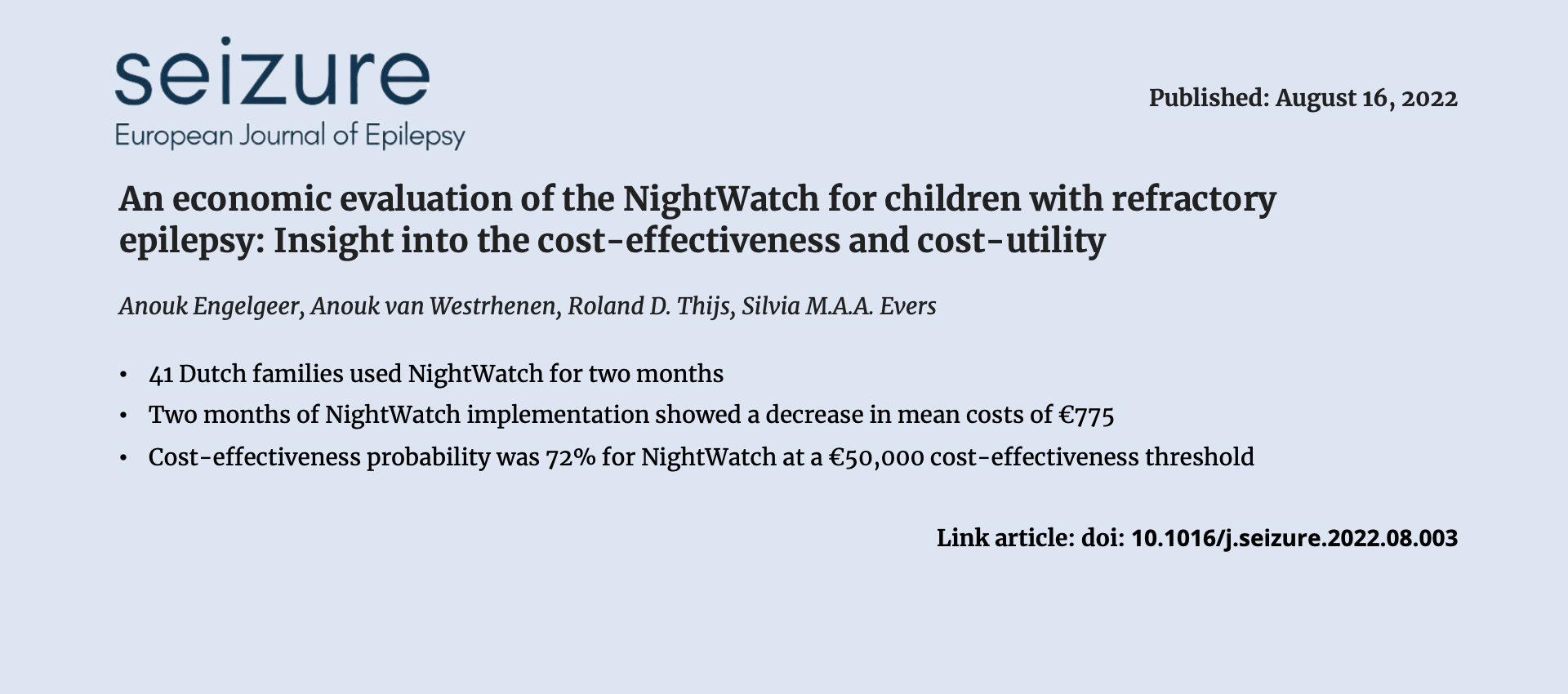
- Engelgeer A, van Westrhenen A, Thijs RD, Evers SMAA. An economic evaluation of the NightWatch for children with refractory epilepsy: Insight into the cost-effectiveness and cost-utility. Seizure. 2022;101:156–61. doi: 10.1016/j.seizure.2022.08.003